Most coaching manuals are like IKEA instructions for a zone defense. They tell you to follow steps A through Z for a winning team. But what if the key tool is a simple question? Why?
Before you draw up any plays, you must dig into your coaching philosophy. Sandra Edge, a top New Zealand coach, says the best coaching lets players “be challenged, learn, and have fun.” This is your guiding light. But you also need to find out why your athletes are here. Is it for glory, friendship, or to escape teenage drama?
This search isn’t just about feeling good. It’s the foundation of your coaching. As Kimiora Poi points out, it’s about purposeful coaching. This clarity shapes every decision, turning your session planning into a focused plan.
Programs like Play Like a Champion use the GROW framework: Goals, Relationships, Ownership = Winning. Goal-setting is key. Whether it’s mastering a full-court press or making sure every kid leaves happy, clear goals are your guide. They give your SMART goal a purpose, making it the heart of your playbook.
Let’s build something that will last, not just sand.
Drill Progression
Ever seen a coach make players run mindlessly and thought it was punishment? It’s not just bad coaching; it’s a big mistake in training. The best practice drills don’t just make bodies strong. They also train minds and improve specific skills.
The classic mistake is making linemen run 100 yards. What skill does this really improve? Football is played in many directions, not just straight. This method mixes conditioning and skill work like baking a cake without mixing the ingredients.
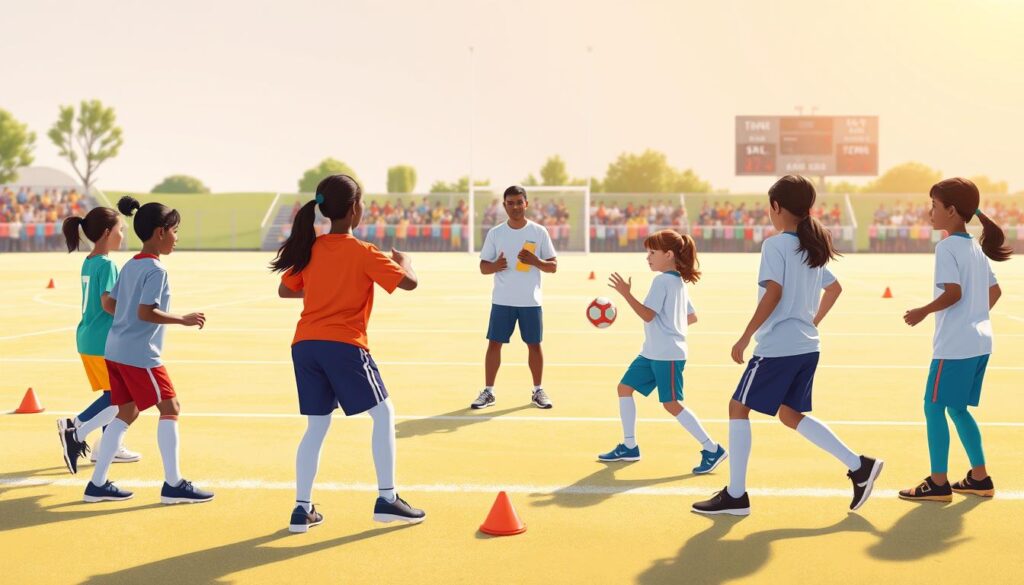
Instead, use high-intensity, game-like activities that boost skills and condition at the same time. Think of “Turtles, Dogs and Elephants” or “Capture the Cone.” These aren’t just fun games. They’re designed to make players think and act like they’re in a real game.
Players will push themselves harder in game-like situations than in simple drills. The cone is like territory to defend. The finish line is victory over a teammate. This turns hard work into a meaningful goal.
I once saw a coach switch from sprints to “Capture the Cone.” The results were amazing:
- Lateral movement and change of direction
- Tactical decision-making under pressure
- Natural, sport-specific conditioning
- Players actually looked forward to “conditioning”
The secret is in how you progress. Good practice design has a clear story:
- Foundation: Start with the skill in easy situations
- Application: Add game-like challenges and decisions
- Integration: Mix different skills in competitive scenarios
This method “stretches” players, helping them get better at their sport. Each rep should improve both skill and confidence. Moving from simple to complex turns boring drills into meaningful growth.
Want to see this in action? Check out these Youth Basketball Drills and Practice Plans for great examples of skill development.
The key is to make every drill count. If your drills feel like a waste of time, you’re doing it wrong. The best practice drills are tough, but also mentally and emotionally engaging. They make players eager to improve, not just finish a drill.
Sample Schedules
If your practice plan looks like it was designed for Navy SEALs, you’ve missed the point. We’re moving away from boot camp brutality to something better—holistic rhythm over military precision.
Think of the young athlete as a four-walled house. This is Te whare tapa whā, a Māori framework. It reminds us that well-being needs mental, spiritual, physical, and social walls intact. Now add the Five Cs: Competence, Connection, Character, Confidence, Caring, and Contribution. Your schedule isn’t just teaching dribbles; it’s building a person.
So what does a 90-minute block built on these principles look like? It respects the complete athlete moving between school, home, and field. The magic isn’t in longer drills, but in intelligent allocation.
| Time Block | Activity | Primary Focus | Five Cs Addressed |
|---|---|---|---|
| 0-15 min | Dynamic Warm-up & Community Circle | Social Well-being | Connection, Caring |
| 15-40 min | Focused Skill Development | Physical Competence | Competence, Confidence |
| 40-70 min | Small-Sided Strategic Game | Mental & Emotional Growth | Character, Confidence |
| 70-90 min | Cool-down & Group Reflection | Spiritual Reflection | Caring, Contribution |
Notice the progression? We start with connection because a kid who feels belonging tries harder. The warm-up isn’t just jumping jacks—it’s sharing a win from their week. This builds the social wall before we ever touch a ball.
The skill block develops competence, yes. But more importantly, it builds confidence through achievable challenges. We’re mastering one new move through positive repetition.
The strategic game is where character gets tested. Modified rules force decision-making. Do you hog the ball or pass to an open teammate? These moments teach more than any lecture on sportsmanship. They build the mental and emotional walls.
Lastly, the cool-down reinforces contribution. What did you learn? How did you help a teammate? This reflection turns activity into identity. They leave feeling like complete athletes, not exhausted drill participants.
Need help structuring this? A flexible weekly schedule template can adapt these principles across your season. The goal isn’t rigid adherence, but mindful balance.
These youth routines work because they respect the whole child. They build athletes who stick with sports for years, not ones who quit by eleven because practice felt like a joyless part-time job. Now that’s a schedule worth following.
Balancing Skills & Fun
Many coaches believe that being tough and having fun are opposite things. They think every laugh means less time for learning. But what if I told you this thinking is why players leave?
Research shows kids quit sports because it’s no longer fun. This isn’t just a story; it’s a fact. When fun goes away, so does their commitment.
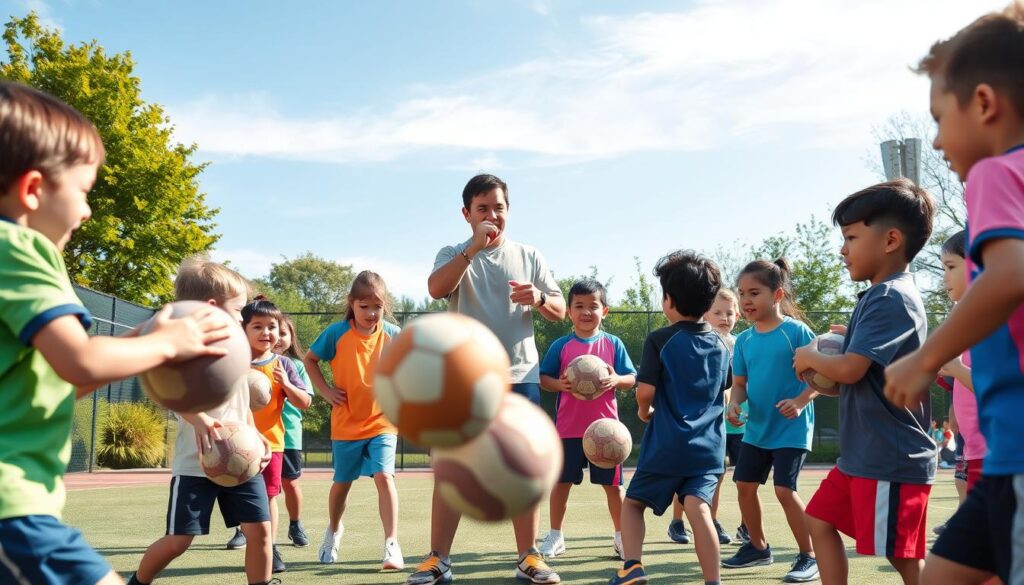
An anonymous player once shared their team’s story. They had both future pros and kids who just wanted to hang out. But they all wanted to get better and have fun. This is the norm, not the exception. We should aim to create an environment that values both excellence and enjoyment.
When we see fun as the engine, not just a reward, magic happens. Players who enjoy game-based practice drills put in effort without realizing it. They focus better and stay committed longer. This is because their brain is in a state of flow, where learning happens fast.
“Turtles, Dogs and Elephants” is a game that players love to play. It looks simple but teaches important skills like spatial awareness and teamwork. The laughter shows that deep learning is happening.
This approach makes practice drills something players look forward to. The Play Like a Champion philosophy is spot on. We must keep sports joyful to make competition meaningful and sustainable for athletes.
Think about how skills are transferred. Players doing boring drills might get muscle memory. But players enjoying games learn something more valuable: contextual intelligence. They learn to apply skills in real game situations, which is what we’re preparing them for.
It’s not about splitting time 50/50 between skills and fun. It’s about combining them. A good practice drill should feel like a game while improving specific skills. Coaches need to observe and adjust to keep the fun and skill development in balance.
Coaching becomes an art when you understand the need for balance in sports. Kids need a balance between effort and enjoyment, challenge and ability, and individual growth and team spirit.
So, when planning practice drills, ask if players would choose to do them if they weren’t forced. If not, you know where to improve. The best skill development happens when players don’t want to stop playing.
Post-Practice Feedback
The final whistle blows. You gather the team, say “good practice,” and end the day. This is where most coaching stories stop. It’s why many coaches keep making the same mistakes.
Real improvement needs a deep look back. Programs like Play Like a Champion focus on more than just drills. They include preseason and postseason checks for everyone—players, coaches, and parents.
They use weekly “Champion Notes” for reflection. This isn’t just about feeling good. It’s about collecting detailed data.
Ask your players what worked and what didn’t in a simple poll. That honest feedback about the Ferns dress and hanging out with friends? It comes from asking directly. Have parents share their thoughts on the team’s culture. Most importantly, reflect on yourself. The best coaches keep learning.
Did your planning meet your goals? Where did your ideas work, or fail to?
This feedback loop is your secret weapon. It turns coaching into a continuous story. Each piece of feedback helps plan your next session. You stop guessing and start adapting.
The work is never done. It’s just getting better with each try. Your next practice plan is already being shaped by honest feedback from the last one.