
The youth sports world can feel like a reality TV show. Everyone is fighting for a trophy that might be plastic.
The first thing you need to do isn’t plan tournament game strategy. It’s the hard work of building technical skills.
It’s like learning scales before you play a symphony. I’ve seen young athletes learn complex team tactics before they can pass the ball.
Learning the basics is key in early development. Why? Creativity and smart choices come from technical confidence. You can’t play a jazz solo without knowing the chords.
This focus helps avoid burnout. Loving the game means you can play it well. True support is about praising effort and growth, not just winning.
It’s about preparing the toolbox before fixing the engine. For more on critical skills prioritization, or the technical skills vs. soft skills debate, the analysis gets deeper.
Age-Appropriate Tactical Teaching
Imagine trying to explain complex strategies to a kindergarten class. This is what happens when we try to teach team tactics to young athletes. A coach might draw a complex plan for a U8 soccer team, but it’s hard for them to understand.
Young sports can turn into chaos. The focus shifts to winning at any cost. This creates high pressure and can stop kids from enjoying the game.
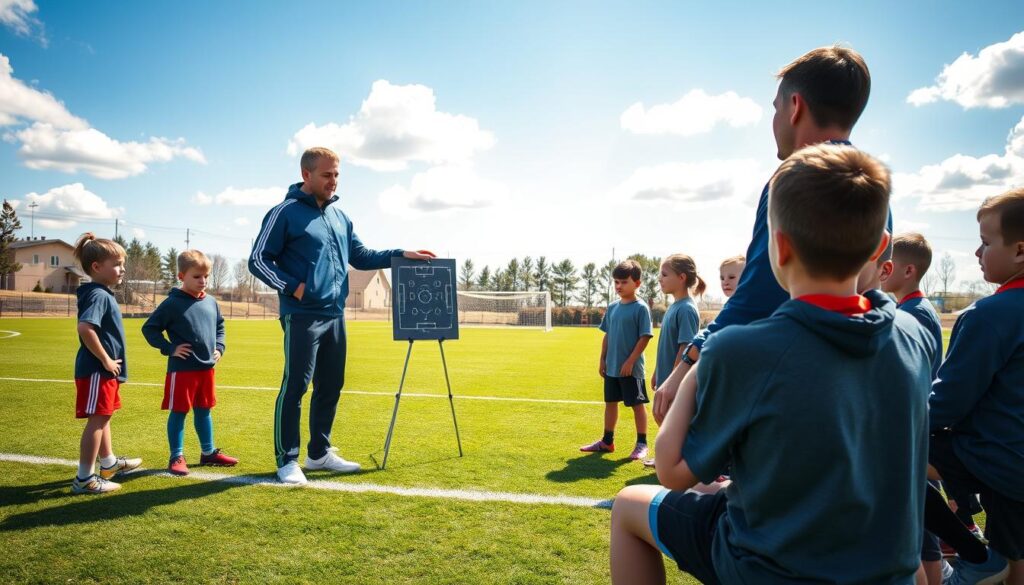
The biggest challenge isn’t the opposing team. It’s often the over-enthusiastic parents, like parent-coaches. Their constant advice can make kids anxious. It’s important for parents to let kids solve problems on their own.
So, what’s a better way? It’s about teaching simple ideas, not complex strategies. For young kids, it’s about understanding basic concepts, like spreading out when you have the ball. This approach helps kids develop their problem-solving skills.
The aim is to help kids become problem solvers, not just follow rules. Good team tactics for youth focus on building decision-making skills. Start with structured practice plans that introduce one simple idea at a time. The key is to know when to adjust your expectations, not just your game plan. It’s about nurturing growth, not building a machine.
Blending Both in Training
Coaching is like alchemy, blending skills and tactics into a rhythm. The magic happens when drills meet real game scenarios. It’s about the final pass being both a skill and a tactical choice.
Teams like Pateadores know this. They don’t choose between developing players and winning. It’s about discipline under pressure, where practice meets purpose. Players must own their growth for lasting success.
This approach is similar to teaching. The best progression comes from combining structured learning with exploration. In training, this means practicing a skill in a game that needs it.
Finding the right balance is key. Celebrate effort, not just results. Set achievable goals and promote balance and rest. This approach creates resilient, engaged players.
The real victory is when a player loves the game years later. They were taught to think, not just follow orders. That’s true progression.