
Great teams don’t just play through bad conditions. They plan for them. Rain, wind, and the playing surface itself are not mere obstacles. They are variables you can analyze and build a strategy around.
Think of it as a matrix. A soaked, heavy wet pitch changes everything about ball speed and player footing. A dry, well-maintained field offers a completely different turf speed. Groundskeepers actively manage moisture and composition to control these exact factors.
Understanding this dynamic is the first step to winning in tough environments. It turns reaction into proactive game planning. This kind of strategic adaptation starts with targeted practice routines that simulate real-game challenges.
Ball Speed & Pressing in Rain
The rain makes the field slick, affecting ball speed and defense. Knowing this can help you win.
On a wet pitch, the surface gets more slippery. Water adds drag, making ground balls roll slower. The ball also gets heavier, making it harder to hit far or pass accurately.
This makes the ball slow and heavy, a big chance for your team. Pressing becomes a strong tactic. It’s easier to make the opponent make mistakes.
To press well in the rain, position your players smartly. Block the short passes that teams usually use. This forces the opponent to make risky long passes or lose the ball.
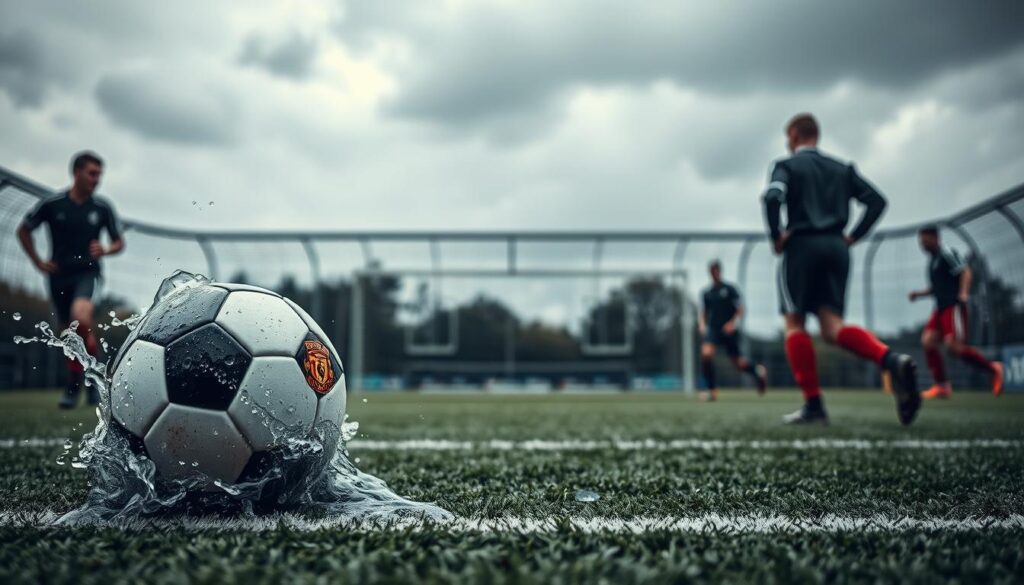
Staying focused is key in the rain. Rain delays can mess with your rhythm. Use the break to remind your team to keep pressing hard.
| Game Aspect | Dry Pitch Action | Wet Pitch Adjustment |
|---|---|---|
| Ball Control | Softer first touch to cushion the ball. | Firmer first touch to prevent the ball from sticking in the water. |
| Passing | Can rely on rolling balls to maintain speed. | Use more lifted passes to skip over the wet surface; expect passes to slow down. |
| Pressing Trigger | Press when the opponent is in a wide or weak position. | Press immediately on any back-pass or square pass, as control is harder. |
Winning in the rain means being bold and organized. Adjust your ball speed and press hard. This way, a wet pitch becomes your advantage.
Wind: Long vs. Short, Set‑Piece Aim Points
When a strong breeze hits the pitch, your game plan must change. You must decide: go long or keep it short? The wrong choice can lead to losing the ball and counterattacks.
A tailwind helps your attacking line. It makes passes and long balls faster. Tell your midfielders and defenders to send early, direct balls behind the defense. Your forwards should make deep runs, ready for the extra distance.
But, a headwind means you need a different strategy. Long balls won’t go far, and goal kicks might not reach. Switch to short, possession-based play. Use quick ground passes and combinations to control the ball, avoiding the wind’s impact.
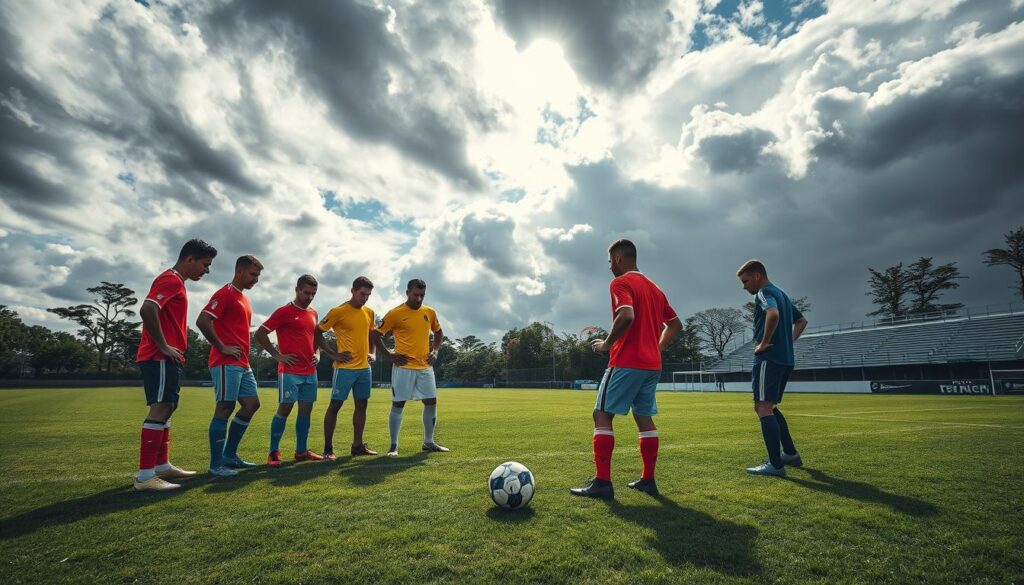
How you hit the ball matters too. Think like a baseball pitcher adjusting their spin. For a headwind, use firm topspin to keep the ball low. With a tailwind, try a floatier or backspin contact to deceive the goalkeeper.
Set-pieces need precise planning in the wind. For corners and free kicks with a crosswind, aim upwind of your target. If the wind is from left to right, aim your in-swinging corner left of the near post. The wind will guide it back.
For goal kicks, talk to your target player. Against a headwind, kick short or with maximum power. With a crosswind, kick to the side of the field where the wind is coming from, letting it curve back.
| Wind Direction | Recommended Passing Game | Set-Piece Adjustment | Key Strike Technique |
|---|---|---|---|
| Strong Tailwind | Direct, long balls & early through passes. Exploit space behind defense. | Take goal kicks quickly; aim free kicks lower as ball will carry further. | Use standard or slight backspin for dipping shots. |
| Strong Headwind | Short, possession-focused. Ground passes and combinations. | Play corners short or drive them low. Goal kicks must be short or extremely powerful. | Apply firm topspin to keep ball trajectory low and driven. |
| Crosswind (Left-to-Right) | Favor passes to right wing; be cautious with left-footed switches. | Aim in-swinging deliveries to the LEFT of target. Aim out-swingers to the RIGHT. | Strike with side-spin to work with the wind’s curve. |
| Crosswind (Right-to-Left) | Favor passes to left wing; be cautious with right-footed switches. | Aim in-swinging deliveries to the RIGHT of target. Aim out-swingers to the LEFT. | Strike with side-spin to work with the wind’s curve. |
Adapting to the wind takes practice and clear communication. Drills on windy days are key. By using the wind to your advantage, you can control the game.
Heat Sub Patterns & Hydration Windows
Managing body temperature through planned rotations and hydration windows can be a game-changer. In hot conditions and high humidity, players get tired faster, dehydrate, and lose focus. It’s more than just drinking water for today’s teams.
Having hydration windows means specific times for drinking fluids and electrolytes. There are three main parts to this strategy:
- Before the Match: Players should drink water regularly 24 hours before the game. They should have a big drink 2-3 hours before starting.
- During Breaks: Use every break to drink small amounts of an electrolyte drink. This keeps the body balanced.
- After the Final Whistle: It’s important to drink fluids and replace lost electrolytes after the game. This helps with recovery and getting ready for the next game.
Smart sub patterns are just as important as hydration. Coaches need to plan when to substitute players to avoid exhaustion. A common move is to swap out players in high-energy roles like wingers or box-to-box midfielders at the 60-minute mark.
Using all substitutes is a key strategy to keep the team fresh. This rotation helps control the team’s temperature and keeps up the pressure or defense when opponents are tired.
In the heat, teaching players to conserve energy is key. They should learn to sprint wisely, avoid unnecessary runs, and focus on accurate passes. This helps save energy for the game’s critical moments.
By combining disciplined hydration with smart sub patterns, teams can handle hot conditions better. They can even use the heat to their advantage against less-prepared opponents.
Turf Bounce and First Touch Coaching
Mastering your first touch is all about understanding the turf. The turf speed, hardness, and evenness affect how the ball moves. A well-struck pass can become hard to control if the surface is uneven.
Groundskeepers work hard to make the pitch smooth and consistent. They roll, drag, and control moisture to ensure safety and predictable play. But, every game day brings new challenges.
Different surfaces change the game a lot. Long grass slows the ball, while short, hard grass makes it fast. Loose dirt and artificial turf can make the ball bounce erratically. Players and coaches must adjust to the turf speed during warm-ups.
| Surface Type | Ball Behavior | First-Touch Adjustment | Coaching Cue |
|---|---|---|---|
| Hard, Short Grass | Fast roll, high bounce | Soften receiving surface; cushion the ball | “Toes up, ankle soft” |
| Long, Wet Grass | Slowed roll, dead bounce | Meet the ball; stronger trapping motion | “Step into it” |
| Artificial Turf | Very fast, low skid | Get low, body behind the ball | “Knees bent, watch the skip” |
| Uneven/Dry Ground | Unpredictable bounce | Stay on toes, adjust body quickly | “Ready feet, react fast” |
Good first-touch coaching starts with awareness. Players should feel the surface in warm-ups. Pass the ball firmly to see its turf speed. This helps them adapt technically.
For hard ground, practice soft reception. Receive the ball with a relaxed ankle. This cushions the ball and slows it down. On wet or uneven patches, focus on being ready with your body. Use drills that require quick weight shifts to control bad bounces.
Artificial turf needs special training. The ball rarely sits up nicely. Run drills focused on trapping skidding passes. Teach players to get their entire body behind the ball, using the sole of the foot or a low thigh to smother the momentum.
The key is adaptability. A consistent pitch is good, but players must be flexible. Include drills on different surfaces in practice. Use one station on hard ground and another on a damp area. This builds the flexible skill set needed for any turf speed.
Communicate clearly. Simple, direct cues work best. “Soften up today,” or “It’s skipping, get low,” instantly focus a player on the required technique. By connecting surface observation to touch coaching, you turn a variable into an advantage.
Equipment & Stud Advice
Starting a game plan in bad weather begins with the right gear. Your cleat choice is key for staying safe and on your feet.
For soft, wet ground, long metal studs from Nike or Adidas work best. They dig into the ground, keeping you steady during quick moves and strong shots.
On dry, firm turf, go for shorter studs or blades. New Balance and Puma have options that keep you stable and agile without getting stuck.
Hybrid studs are great for changing weather. They mix different lengths and materials for flexibility.
Goalkeepers need special gloves in the rain. Look for latex palms from Reusch or Uhlsport to keep control of the ball.
In hot weather, wear moisture-wicking base layers from Under Armour. For cold games, thin thermal layers that don’t slow you down are best.
The right gear lets you face any weather challenge head-on. It turns tough conditions into your advantage.