
Saturday mornings in coaching aren’t for coffee and newspapers. They’re for game film analysis that would impress Sherlock Holmes. We’re not just watching tape; we’re doing a deep dive into football’s DNA.
Each coach turns into a detective at this football crime scene. The DB coach tracks pass routes, the O-line studies defensive moves, and the WR coach figures out coverages. It’s like teaching Shakespearean sonnets to students – they get the big picture.
I also let our players watch the game footage. It’s a great way to learn football IQ. We keep meetings short, ending by 2pm. Any longer and it’s like watching a long movie.
This isn’t just getting ready – it’s learning through organized chaos. Welcome to the war room.
Tools for Analysis
Opponent scouting is like a battle of wits, and your tools are cheap. Forget about fancy gadgets. Instead, use old-school tools that would impress Sherlock Holmes.
Start with a clipboard, pencils, and scouting sheets. These are your basic tools for turning chaos into order. Add a legal pad for those sudden insights, and you’re ready to analyze like a pro.
Arriving early is key, not just for traffic. It lets you grab the program with rosters before they vanish. Watching warm-ups reveals a lot: which receiver prefers his left foot, which quarterback’s throws are extra strong, and which lineman might be hurt.
Choosing your seat is strategic. You want to see patterns but also hear the impact. This view lets you map out plays with great detail.
Your scouting sheet should track every play:
- Down and distance – the situational context that reveals tendencies
- Yard line – where patterns change in the red zone versus midfield
- Score and time – the psychological factors that influence play calling
- Formation and personnel – who they trust when it matters most
Yes, we time punters with stopwatches. Every second counts in opponent scouting. That extra hang time could change the game.
This isn’t just collecting data. It’s figuring out your opponent’s playbook before they do. Even with tools like Hudl, sometimes the best analysis starts with a pencil and paper.
The best opponent scouting is about more than just watching the game. It’s about understanding the hidden signals. That third-down tendency when they’re protecting a lead? The favorite route combination from empty sets? It all shows up to the keen observer.
Remember: great opponent scouting turns unknowns into knowns. It turns surprises into expectations. And it turns opponents into open books. Your $2 pencil might be the most valuable tool in your arsenal.
Identifying Patterns & Weaknesses
Football’s defensive game is like a chess match. Every strong point has a weak side. It’s hard to block everything without creating a new problem.
Understanding numbers is key. Knowing how many players are on the field can give you an edge. It’s not just math; it’s finding the best way to outsmart your opponent.
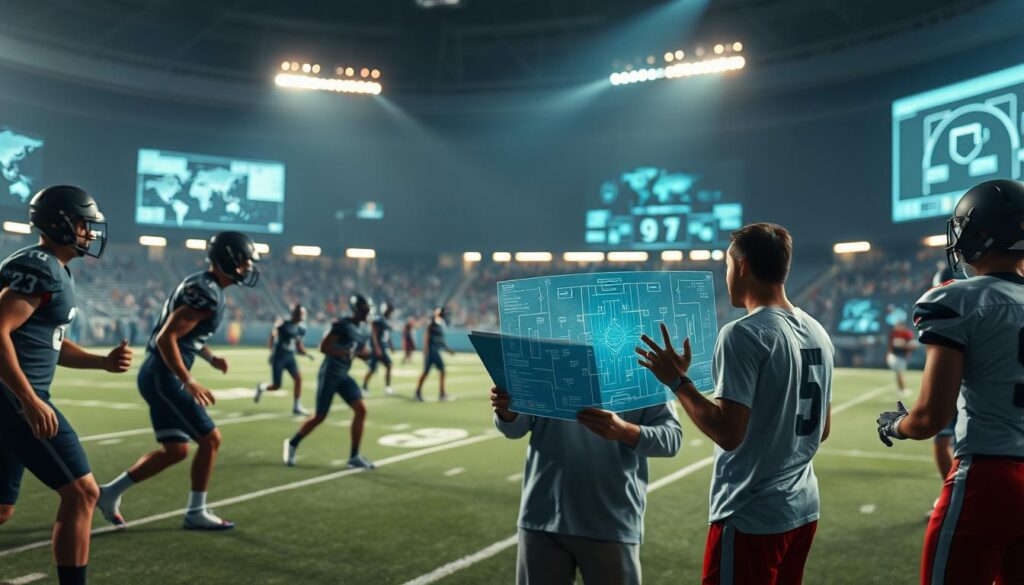
My coaching team watches games like art critics. Each coach looks at their part while seeing the big picture. The defensive line coach checks the nose guards and tackles. The running back coach looks at the inside linebackers.
I’m in the press box, surrounded by notes like a football version of A Beautiful Mind. Patterns become clear to those who know what to look for. This method turns data into useful information for scouting game preparation.
Coverage schemes tell a story. Man coverage means one-on-one battles. Zone coverage means there are spots for the quarterback to throw to. The defense’s strengths often hide their weaknesses. You need to find where the defense will crack.
Every defensive setup has its secrets. Patterns show up with careful watching. It’s not just watching football; it’s reading the defense’s story as it unfolds.
Building a Custom Game Plan
My playbook is like a legal brief, ready for every defense move. The art of pre-match prep turns into a strategic battle with the “If-Then” framework.
It’s like combining chess grandmaster skills with courtroom tactics. Every call is a planned move, not just a wish.
- Predictive calls: Traditional “if they show Cover 2, then we run seam routes” logic
- Pre-snap adjustments: Audibles with better marketing – reading alignments before the snap
- Post-snap reactions: Where RPOs live but option football mastered this decades ago
My call sheet is not just a list of plays. It’s a set of answers to questions the defense hasn’t asked yet. I prepare for pre-match prep like a Broadway director for opening night.
I start with the first 10 plays, using different motions and formations. Why? I’m not just calling plays – I’m testing how they line up. It’s like a sneak peek at the defense’s strategy.
Once I find their weak spots, I go in for the attack. My system turns football into a battle of brains, not just brawn.
This way of pre-match prep makes a big difference. It’s what sets the artists from the architects. One might create a moment, but the other builds a season.
Communicating with Players
Ever tried explaining quantum physics to a golden retriever? That’s what coaching feels like when you skip the game film analysis. Players don’t need another voice shouting commands. They need a translator for the beautiful, brutal language of football.
I start every practice like a film director presenting storyboards. “Here’s what our masterpiece looks like,” I say, pointing to flawless execution on screen. Then we work backward to create the shooting schedule. It’s reverse-engineering excellence.
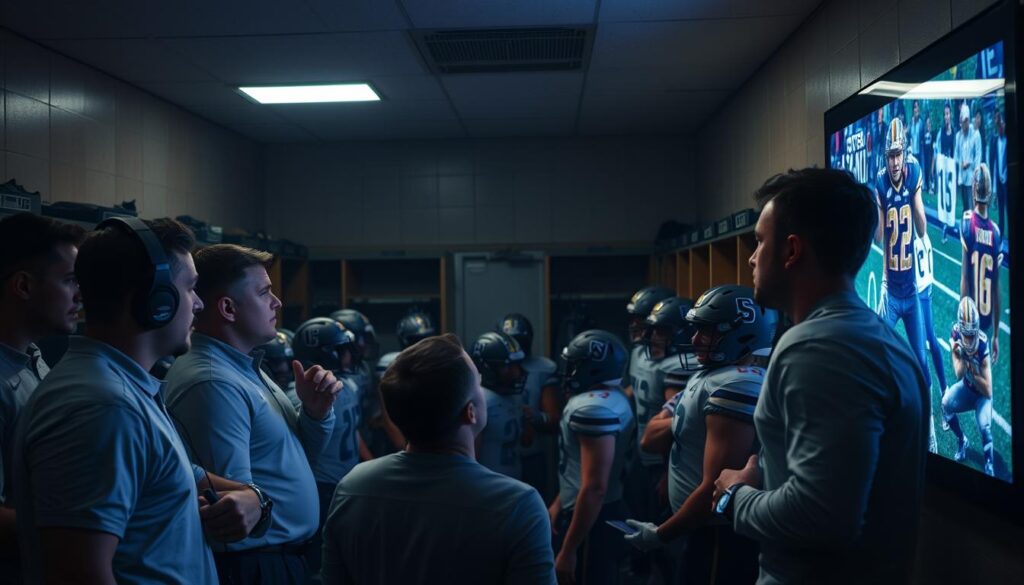
The magic happens when players see themselves doing things right. Catch a linebacker making one perfect read? That single frame becomes our North Star for the week. We’re not just correcting mistakes – we’re building a highlight reel of what’s possible.
Why does this work? Because game film analysis transforms abstract concepts into concrete evidence. Players don’t just hear about proper technique – they see it. They don’t just get told about mistakes – they witness them. It’s visual learning meets Vince Lombardi.
Here’s how we structure our film sessions:
- Start with the vision – show exactly what we’re building
- Use side-by-side comparisons of good and bad execution
- Freeze-frame on moments of perfection
- Connect every practice rep to specific game situations
When players understand the why behind drills, practice transforms from obligation to opportunity. They’re not just running routes – they’re solving puzzles. They’re not just hitting bags – they’re preparing for specific opponents.
The best game film analysis sessions feel less like lectures and more like detective work. We’re Sherlock Holmes with shoulder pads, looking for clues in the footage. “Notice how their safety cheats toward the strong side? That’s our opening.”
This approach creates something beautiful: players who can self-correct. They develop an internal quality control system because they know what excellence looks like. They become their own coaches between snaps.
Remember: great communication isn’t about being heard. It’s about being understood. And nothing creates understanding faster than showing. That’s the real power of game film analysis – it turns confusion into clarity, and players into partners in the process.
Adjusting Plans Mid-Game
Watching a game from the stands is fun. But from the sideline, it’s like doing heart surgery during an earthquake. The perfect plan we made all week crashes into reality when the game starts.
Our coaching team works like a trauma team. Each person checks different things. The defensive coach looks at formations. The offensive coach checks the defense’s setup. The special teams coach watches who’s on the field.
I know jersey numbers like they’re my phone number. During games, I need facts, not feelings. “56 made the tackle” tells me everything I need to know right then. The why and how can wait for later.
This opponent scouting turns our freshmen into tech experts. They help coaches by showing replays fast. It’s like having instant replay for strategy, not just for checking calls.
The game looks chaotic to others but is carefully planned. It’s like a newsroom on election night. Everyone has a role, but we all aim for the same goal. We make changes between plays, during timeouts, and between series.
Being able to change plans mid-game shows who’s a true tactician. The best plans are flexible, like a living thing. This opponent scouting turns bad situations into good ones.
When our plan meets reality, we don’t give up. We make it better. Being able to adjust becomes our new strategy. It’s a system that learns and changes as it goes.
Historical Success Stories
Do you remember that 2018 state championship? The undersized defensive line from Central High took down a top-ranked passing team. It wasn’t just talent; it was hard work and smart planning. The coaches had found three key strengths and weaknesses in the opponent’s defense.
They noticed the left tackle’s weakness on play-action. The center’s giveaway when pulling right. And the quarterback’s first look was always at his main receiver. These small details were turned into big wins for the team.
This approach is like Moneyball for high school football. It’s about finding hidden gems and using them to win. The best teams aren’t always the most talented. They’re the ones who prepare the most.
In the 2021 regional finals, a team with no Division I players scored 42 points in the fourth quarter. Their secret? They practiced solving the puzzles of their opponents. Every drill was aimed at exploiting specific strengths and weaknesses.
It’s amazing what ordinary athletes can do with the right coaching. They can become more than they ever thought possible. It’s not magic; it’s hard work and smart planning.
These teams practice like scientists in a lab. They focus on one weakness and one strength each day. Thursday might be all about fixing a blitz recognition issue. Friday, they practice for the opponent’s favorite third-down play.
The best coaches don’t look for new players; they make the most of what they have. They prepare their athletes so well, it seems unfair. Their players aren’t better; they’re just better prepared.
Looking at these success stories, a pattern emerges. It’s not about being the best athlete. It’s about understanding your opponent’s strengths and weaknesses. The winning teams know something their opponents don’t. That’s a twist even Disney couldn’t come up with.
Conclusion
So, what’s the secret to making a team a Friday night powerhouse? It’s not about finding a magical playbook. It’s about creating a system for every pre-match prep session.
Great coaches focus on more than just talent. They turn what they have into a team with purpose. It’s not about having better players, but better strategies. Your prep should answer questions before they’re asked.
Friday’s win comes from Tuesday’s focus and Thursday’s fine-tuning. Don’t just hope for success—make it happen. Go into the game ready with answers, not just plays. The mind that’s prepared always wins over the talented body.