
Basketball programs across the Lone Star State dictate the modern tempo of the sport. Every single night, fans watch average college teams exchange meaningless passes around the perimeter. That lazy approach fails spectacularly against elite competition. Programs like the Houston Cougars and Baylor Bears run absolute clinics on defensive pressure and court mapping. If you want to comprehend how real coaches win tight games, look at the precise strategies deployed by these Texas universities. Fans placing wagers on Texas sports betting lines know the value of backing a disciplined roster. Sharp bettors study the defensive schemes before looking at any offensive stat sheet. Offenses go cold. Elite defensive rotations win national championships.
The Houston Cougars Defensive Monster
Kelvin Sampson completely rewrote the rules of pick-and-roll defense. Most college coaches tell their big men to drop back into the paint during a screen. They bait the ball handler into taking a contested mid-range jumper. Sampson hates that passive methodology. He commands his players to blitz the screen with terrifying aggression. He built a system known as the ‘Monster Trap’ that attacks the ball handler before the screen even fully materializes. Opposing guards panic under the extreme pressure and throw chaotic passes out of bounds.
This aggressive approach forces the entire Houston rotation to operate in perfect sync. Once the primary defenders trap the ball, the remaining three players must fly across the court to cover the passing lanes. Jawan Roberts anchors this system by recovering to the paint with incredible speed. His ability to close the gap eliminates easy layups. The entire unit plays a physical brand of basketball that mentally breaks opponents by the second half. Check out the Mitch Johnson Spurs defensive strategy to see how these exact high-pressure principles translate directly to the professional ranks.
Sampson treats offensive rebounding as a direct extension of his defensive philosophy. When you miss a shot and immediately send three players crashing the offensive glass, you prevent the opposing team from starting a fast break. Houston players swarm the rim, grab the loose ball, and reset the shot clock. This completely drains the will of the opposing defense. They fight for a full thirty seconds just to surrender an offensive rebound and start the miserable process over again.
Baylor Bears No-Middle Philosophy
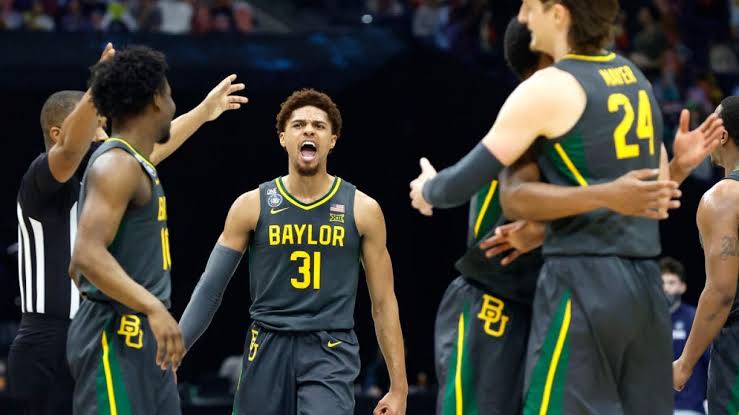
Scott Drew took a different path to defensive supremacy in Waco. His coaching staff implemented a strict ‘no-middle’ defense that forces every single ball handler to the baseline. Defenders position their feet completely parallel to center court. They refuse to let anyone penetrate the middle of the floor. When an opposing point guard attacks the baseline, the defense instantly swarms him and traps him in the corner. This chokes off all the primary passing angles and forces contested shots over multiple defenders.
Drew pairs this baseline trap with elite guard play on the other end of the floor. The Baylor Bears basketball system demands absolute perfection from its backcourt. Guards run relentless commando dribbling drills to guarantee they never lose control of the basketball under pressure. They perfect the five-spot shooting drill to guarantee they hit open shots when the defense collapses. This combination of suffocating defensive positioning and lethal guard execution creates an absolute nightmare for any team stepping into the Ferrell Center.
The historical results speak volumes. Elite guards thrive under this structure. They learn exact angles and build the stamina required to execute complex reads under heavy defensive pressure. Drew builds his rotation entirely around versatile athletes capable of surviving this demanding two-way system.
The Texas Longhorns High-Tempo Switch System
Down in Austin, the basketball culture revolves entirely around pace and positionless switching. The Texas Longhorns recruit some of the most freakish athletes in the entire nation. They use that raw athletic advantage to switch every single screen on the perimeter. Instead of fighting through picks and giving up open jump shots, they simply swap assignments. A point guard seamlessly switches onto a power forward. A center steps out and guards a quick shooting guard.
This switching scheme completely destroys traditional offensive sets. Opposing coaches draw up beautiful plays designed to create mismatches. The Longhorns simply point, switch, and flatten the action into an isolation possession. That isolation leads to a heavily contested jump shot. Once the ball hits the rim, the Texas athletes secure the rebound and instantly push the tempo. They run the floor with terrifying speed and score easy transition buckets before the defense can even establish a structure.
Tactical Variations Across Texas Teams
Comparing the top tactical approaches reveals clear distinctions in philosophy. Coaches recruit entirely different athletes to fit these exact molds.
| Team | Primary Defensive Strategy | Offensive Focus | Key Tactical Advantage |
| Houston Cougars | Monster Trap / Blitz | Offensive Rebounding | Forces high turnover rates |
| Baylor Bears | No-Middle Scheme | Elite Guard Creation | Traps ball handlers in corners |
| Texas Longhorns | Heavy Switch Man-to-Man | High-Tempo Transition | Neutralizes pick-and-roll actions |
| Texas Tech Red Raiders | Gap Defense | Paint Touches | Limits easy perimeter passes |
These systems demand grueling practice sessions. Players must memorize exactly where to stand and when to rotate. One blown assignment ruins the entire possession. Coaches bench players who miss their defensive marks. Accountability remains the highest priority for these top-tier programs. They never accept lazy closeouts.
Exploiting Defensive Structures for Profit
Vegas oddsmakers struggle to accurately price these elite defensive teams. Casual bettors blindly throw money at high-scoring offenses. That creates massive value for those who back the grit and grind of Texas basketball. If you track the point spreads for the Houston Cougars defense, you notice they regularly cover the margin by simply shutting out their opponents in the final ten minutes of the game.
Follow these strict rules for analyzing college basketball matchups:
- Bet the Under on Passive Offenses: Teams lacking elite point guards completely fold against the Monster Trap.
- Back Baseline Discipline: A disciplined no-middle defense easily covers the spread against isolation-heavy teams.
- Value Defensive Rebounding: Second-chance points destroy betting margins.
Identify the programs running tight rotations and executing flawless defensive mechanics. Ignore the flashy dunks and focus on the steals, deflections, and forced shot-clock violations. That is where the real money lives. Elite tactical execution prints cash.
FAQs
What is the Houston Cougars Monster Trap?
Coach Kelvin Sampson uses an aggressive blitz strategy on pick-and-roll plays. Two defenders aggressively trap the ball handler to force turnovers instead of dropping back into the paint.
How does the no-middle defense work in basketball?
Defenders angle their bodies to deny any penetration into the center of the court. They force the offensive player to the baseline and trap them in the corner to cut off passing angles.
Why do Texas college basketball teams dominate defensively?
Programs across the state prioritize intense, physical practice sessions and recruit athletes capable of executing complex switching systems. Coaches demand absolute accountability on the defensive end of the floor.