
Life, like youth sports, is full of losses. The real battle isn’t on the scoreboard. It’s in our minds when things look tough.
This isn’t about giving everyone a trophy. It’s about building mental strength. We’re talking about positive framing. It’s the skill to turn a setback into a lesson in dealing with adversity.
Imagine teaching kids the difference between a bad day and a bad identity. Experts like those behind the Framing Adversity guide teach us to separate our self-worth from the game’s outcome. This idea is as important as it is hard to grasp.
Emotional control is key. We need fewer emotional outbursts and more calm moments. Why tell a kid that “it’s supposed to be fun”? It’s more than a cliché; it’s deep advice for life.
The basics are straightforward. Focus on the effort, not just the outcome. Keep the bigger picture in mind. See defeat as a chance to. This is the foundation of positive framing.
Losing isn’t a sign of weakness. It’s a chance to grow stronger. That’s the first lesson in positive framing.
Post-Loss Meetings
The locker room after a loss is not a place for blame. It’s a space for learning from mistakes. My first rule is to respect silence. This moment after the game is important for reflection, not for quick fixes.
As Miriam Willard advises, let kids feel their emotions first. Trying to explain away their feelings is like trying to stop a storm with words. It’s not effective.
After the storm, guide the reflection. Don’t jump straight to analyzing what went wrong. Start by asking, “What went well?” Even in a tough loss, there’s something positive to find.
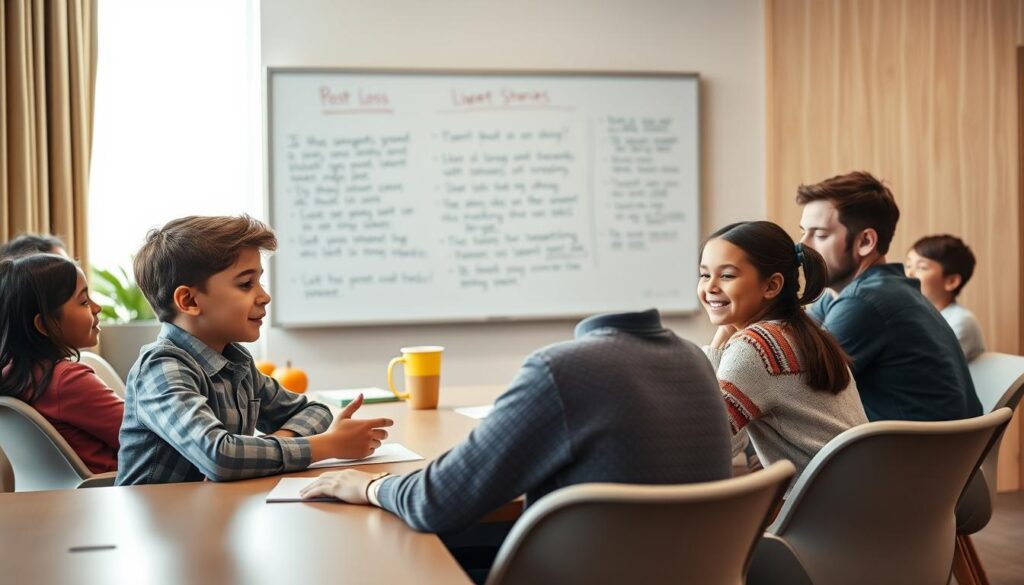
Your role is to help them analyze the loss like a business strategy. Focus on what you can learn, not just what went wrong. Use questions to help them see things differently.
Let’s look at two ways to approach the post-game huddle:
| Approach | Focus | Coach’s Role | Outcome for Player |
|---|---|---|---|
| The Blame Game | Identifying the culprit; fixing “who” is wrong. | Interrogator, judge. | Shame, defensiveness, fear of failure. |
| The Resilience Audit | Extracting “what” and “why” from the performance. | Facilitator, analyst. | Ownership, learning, tactical awareness. |
| The Empathy Builder | Understanding team & opponent perspectives. | Guide, philosopher. | Sportsmanship, team cohesion, emotional intelligence. |
Developing empathy is also important. Ask questions that help them see things from others’ viewpoints. This builds resilience and teamwork.
Learning to handle losses well doesn’t just make better athletes. It teaches resilience for life. It’s about learning from setbacks, not just avoiding them. Strategies to overcome adversity are key to success.
Building Grit
The modern obsession with grit often overlooks the hard, messy process of building it. We love the TED Talk version, where perseverance is shown in inspiring music montages. But the real learning happens in quiet locker rooms and during drills where nothing seems to work. It’s there that character is forged, not found.
Let’s be clear: setbacks are not interruptions to the plan; they are the plan. Think of them as the required reps in the weight room of mental toughness. A string of losses isn’t a failure of strategy; it’s a masterclass in tenacity, if you know how to read the syllabus. The goal shifts from avoiding failure to learning how to use it.
The first tool in this construction project is the micro-goal. When confidence is shattered, the idea of winning the whole game feels like a cruel joke. The solution? Make the goal so small it’s almost impossible to miss. “Just get to the next mailbox,” as runners say. In sports, this translates to “complete three passes in a row” or “win the next 90-second shift.” These tiny, engineered wins rebuild belief brick by brick. They turn a massive setback into a series of manageable, winnable moments. This philosophy is central to effective practice, which is why focused drills matter more than ever after a loss.
Next, we tackle the internal soundtrack. After a defeat, a kid’s mind often loops a catastrophic narrative: “We always lose,” “I’m terrible at this.” Grit-building requires a mental choreography swap. Teach them to replace that with the curious, analytical voice of a scientist. Instead of “We failed,” the question becomes, “What’s one variable we can change next time?” This positive self-talk isn’t about empty cheerleading. It’s about building an inner coach who is more forensic than frantic.
This is where modeling and routine come in. Kids absorb reactions like sponges. When a coach calmly dissects a loss, focusing on effort and a single corrective action, it models resilience. Pair this with concrete routines—like a pre-game visualization or a post-practice reflection—and you’re building mental calluses. These practices are pillars of developing grit and resilience, moving the concept from a poster slogan to a lived habit.
To crystallize the shift, let’s break down the transformation from a defeatist to a resilient mindset:
| Aspect | Defeatist Response to Setbacks | Grit-Building Response |
|---|---|---|
| Self-Talk | “This always happens to us. We’re just losers.” | “That didn’t work. What’s one thing we can adjust?” |
| Focus | On the final score and the feeling of failure. | On the next micro-goal or specific skill execution. |
| Action | Shutting down, avoiding practice, blaming others. | Engaging in targeted drills and controlled visualization. |
| View of Failure | A permanent stain on ability. | A data point in an ongoing experiment. |
The endgame isn’t just to survive a tough season. It’s to construct an internal framework so sturdy that future setbacks feel like challenging puzzles, not existential threats. You’re not just teaching kids to bounce back. You’re teaching them how to build a trampoline.
Setting Future Goals
So the final whistle blows. Now what? The smart move isn’t to brood. It’s to build. You need to turn a painful defeat into a blueprint.
Look at that missed coverage? Make it a drill for next Tuesday. Set small, measurable goals. Aim for “complete 85% of passes under pressure.”
Study the team that beat you. Learning from a stronger opponent is key. What did they do that you couldn’t stop? Use those lessons to improve.
Parents and coaches play a big role. Encourage a future-focused mindset. Help kids set goals, not just win. A defeat can be a valuable teacher.