
Remember when youth sports were simple? They involved orange slices and handshake lines. Now, they’re filled with travel ball rivalries and social media fame. The sidelines are a hotbed of pressure.
Today’s sports parents are more than just fans. They’ve spent a lot of money and time. This makes them anxious about their kids’ future in sports.
We face a tough situation. Kids start specializing early, compare themselves on social media, and play in professional-like leagues. Trust in sports organizations is low, but parents are more involved than ever.
The answer isn’t just telling parents what to do. It’s about a pre-season meeting where everyone is open and honest. It’s like a peace treaty for young athletes.
Good Parent-Coach Communication from the start helps everyone work together. It shifts the focus from rivalry to teamwork for the kids’ benefit. This early involvement helps avoid problems all season.
Handling Sideline Coaching
Every Saturday morning, a unique form of coaching happens from the bleachers. It’s called ‘the cacophony of contradictory commands.’ This is when people try to help with their advice, but it often gets in the way.
Imagine the young athlete’s mind as a busy processor. They’re focused on the game, their teammates, and the score. Adding to this with advice from the stands can confuse them.
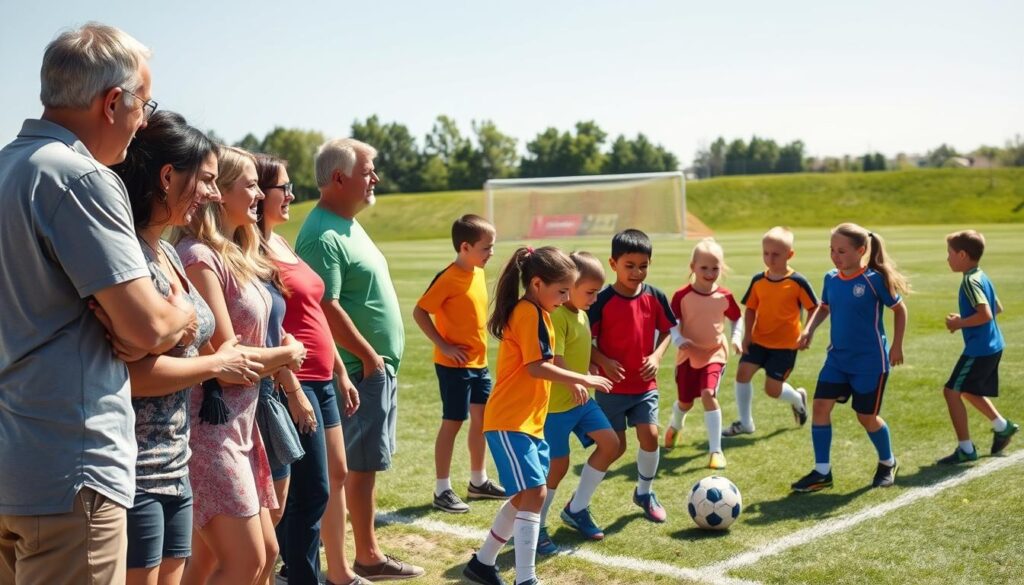
Instead of silencing parents, we need to improve how they communicate. We should move from shouting to clear, positive signals. This is called ‘no-directions cheering.’
What does this look like? Praise effort, not just results. Cheer for hard work, not just goals. Say “Great hustle, Alex!” instead of “SHOOT!”
By doing this, the sideline becomes a place of support, not commands. For teams, setting clear rules for parents helps a lot.
Here’s how different sideline behaviors affect players and teams:
| Sideline Behavior | Player Impact | Team Strategy Effect | Better Alternative |
|---|---|---|---|
| Shouting Tactical Instructions | Cognitive overload, confusion | Undermines coach’s game plan | Cheer for effort: “Great defensive pressure!” |
| Correcting Technique Mid-Game | Self-consciousness, hesitation | Disrupts flow and confidence | Save technique notes for post-game |
| Yelling at Officials | Embarrassment, distraction | Shifts focus from playing to drama | Model sportsmanship with silence |
| Name-Specific Encouragement | Personal validation, motivation | Builds individual and team confidence | Use roster to learn all players’ names |
This table shows that most sideline actions hurt, not help. The only good exception is when a parent’s advice matches the coach’s plan.
Here’s a simple solution. Give out rosters. This small step changes everything. Parents can now cheer for “Jamie on defense!” instead of shouting numbers.
This change is huge. We move from parents trying to coach to them cheering as fans. The sideline becomes a place of positive energy, not confusion.
This isn’t about stopping passion. It’s about using it wisely. The time, money, and emotions invested are worth it for better athletes and a fun Saturday morning.
Conflict Resolution
If youth sports were a lab, conflict would be the most explosive chemical. It’s not a question of if conflicts will happen, but how we manage them. The clash between parental passion and coaching views can heat up more than a double-header in July.
To avoid a small issue turning into a big problem, we need a mix of emotional control and clear talks.

The first rule is simple: take a 24-hour break. This isn’t just advice—it’s like waiting for a boiling kettle to cool down. When issues pop up, our first instinct is to react fast. That’s when we send emails late at night and texts that we later regret.
Wait. Breathe. Let the emotions cool down from boiling to simmer. This simple pause respects human nature. Hot tempers can lead to cold conflicts in youth sports settings.
After the cooling period, talk things over strategically. Choose a time and place where only the coach can hear you. Avoid talking right after a tough loss. Instead, schedule a meeting or a calm call.
Be ready with specific examples, not general complaints. Say “I noticed my child played only five minutes last game. Can we talk about how to get them more playing time?” This turns the conversation into a problem-solving effort.
This method aligns with coaching through conflict strategies that focus on clear communication over confrontation.
But what if words have already caused harm? That’s when “The Repair” comes in—a four-step process from conscious parenting that works well in youth sports.
First, acknowledge and name the hurt. “I realize my comment about substitutions felt dismissive of your expertise.” Second, apologize genuinely without excuses. Say “I apologize for my tone,” not “I’m sorry you felt that way.”
Third, explain how to do things differently. “In the future, I’ll discuss concerns with you privately.” Fourth, ask the other party how they were affected. “How did that exchange impact your coaching?”
This structured repair turns conflict into a tool for building relationships. It shows that in youth sports, we’re all trying to support kids, even if imperfectly.
Sometimes, kids need to speak up for themselves. A teenager asking, “Coach, what can I work on to earn more playing time?” learns important negotiation skills. Other times, parents must step in when safety is at risk or bullying happens.
The key is knowing which situation you’re dealing with. Most conflicts in youth sports aren’t about ethics but how we see things. Is this a chance to teach your child or a real concern that needs your voice?
If conflicts keep happening, get a neutral third party involved. A league official or respected parent can help mediate. This isn’t giving up—it’s recognizing that some issues need outside help.
The goal isn’t to eliminate conflict in youth sports. That’s not possible. The goal is to handle it with diplomacy and the wisdom that this game is about kids, not adults.
Mastering this turns youth sports conflict into a force for growth, not destruction.
Building a Unified Support System
Forget about managing conflicts. The real challenge is building a strong team. We’re moving from “Hunger Games” to “Ocean’s Eleven” style teamwork. This approach turns parental involvement into the heart of the program.
Starting small is key. Learn a parent’s name and offer genuine support. The most powerful move? Give positive feedback before complaints arise. It’s like the pre-game boosts used by 78% of NCAA teams, boosting everyone’s spirit.
Then, educate parents about the long-term athlete journey. Change their focus from “win now” to “grow always.” The key is to build a community among parents. This way, they support each other, share rides, and understand the ups and downs.
This creates a strong network, protecting the program from drama. Effective youth sports programs, like successful schools, rely on strong communication and partnership. When parents work together, youth sports finds its true purpose.