
Watching a talented athlete struggle is common. They have the skill and work hard, but results stay the same. It’s a frustrating sight.
Goal setting is more than just words. It’s about creating a strategic architecture for success. Think of it as building your own skyscraper.
“Win a championship” is a bad goal. It’s hard to control. But “improve swing mechanics for 30 minutes daily” is key. It’s the difference between big goals and doable steps.
SMART goals are helpful, but many athletes set goals that are too high or vague. A good goal should guide you, not just dream.
Real progress comes from learning and using data. It’s what makes hopefuls into contenders. For a detailed plan, check out a development plan.
Feedback Meetings
Imagine a feedback loop so precise it feels like a pit crew fine-tuning a Formula 1 car mid-race. That’s the gold standard. What most organizations call “feedback” is often just a bureaucratic echo chamber. We schedule it, we dread it, we sit through it, and we forget it by lunch.
The real magic—the kind that actually alters trajectories—happens when we stop treating reviews as events and start engineering them as systems for progress tracking.
The corporate playbook loves its quarterly reviews. But let’s ask the real question: does anyone’s performance genuinely change because of a conversation that happens four times a year? Unlikely. Effective progress tracking isn’t calendar-driven; it’s data-informed and dialogue-rich.
It’s the ongoing, gritty conversation that dissects why your reaction time dipped in the third quarter or how your sleep score correlates with sprint metrics.

So, what’s the anatomy of a powerful feedback system? It starts with collecting the right data, not just the easy data. Anyone can track hours logged. The art is in tracking the metrics that lead to outcomes.
This means monitoring progress against the specific benchmarks you set, not just generic activity.
The next layer is the conversation itself. This is where most systems fail. Framing is everything. The goal isn’t to deliver a verdict but to build a hypothesis.
Instead of “Your numbers are down,” try “Let’s analyze the data from this sprint. The metrics show a dip here, which coincided with a new project load. What’s your read on that correlation?” This shifts the dialogue from accusatory to analytical, building resilience instead of shattering confidence.
This brings us to the most strategic element: flexible goal adjustment. Pivoting isn’t failure; it’s a sophisticated response to new information. Regular reviews exist to identify improvement areas, but they must also empower you to change course.
Was the original benchmark unrealistic? Did a market shift redefine what ‘success’ looks like? Your progress tracking mechanism must be agile enough to ask these questions.
| Aspect | The Ineffective Review (Theater) | The Strategic Feedback Loop (Tool) |
|---|---|---|
| Primary Focus | Past performance, often judgmental. | Future improvement, focused on learning. |
| Data Used | Vague impressions and outdated metrics. | Real-time, outcome-linked performance data. |
| Conversation Tone | Monologue from manager to employee. | Dialogue between coach and contributor. |
| Goal Flexibility | Goals are rigid, set in stone annually. | Goals are living documents, adjusted strategically. |
| Outcome | Anxiety and unclear next steps. | Clarity, accountability, and a revised action plan. |
Notice the difference? The right kind of meeting turns monitoring progress into a motivational tool. It’s where you celebrate the small wins that big successes are built on. This coach-athlete dialogue is the glue for maintaining accountability.
When done right, it doesn’t feel like oversight; it feels like having a dedicated co-pilot.
Ultimately, this process is your strategic pit stop. No race is won by just flooring the accelerator and never checking the gauges. You need to pull in, assess the data, make adjustments, and get back out there with a sharper strategy.
This rhythm of evaluate-adjust-execute is the heartbeat of genuine development.
To build this from the ground up, you need a structure. For a deep dive into structured frameworks, explore these individual development plan examples. They provide the blueprint for turning these philosophical pit stops into a practical, living system for tracking your growth. Remember, the goal isn’t to have meetings. The goal is to make progress.
Custom Drills
Thinking a single drill sheet works for everyone? I have some oceanfront property in Arizona to talk about. Generic drills are like fast food for athletes—quick but lacking in real value. Treating all athletes the same is not coaching; it’s mass production.
Real progress is unique. It’s like using a scalpel instead of a sledgehammer. Custom drills are those precise tools. They turn your big goals into real practice.
Want to jump higher by six inches? That’s the goal. The process includes specific actions like explosive push-offs and plyometric landings. Custom drills make these actions real.
So, what makes a drill custom? It’s tailored for the individual. A good custom drill focuses on three things:
- The Athlete’s Specific Weaknesses: Not “needs more power,” but “lacks hip extension velocity in the second step.” This is fixing the performance glitch.
- The Sport’s Demands: A basketball guard and a football linebacker need agility, but in different ways. Drills must match the game’s unique demands.
- The Physiological Makeup: This includes things like muscle type and recovery speed. It’s the biological data that guides the drills.
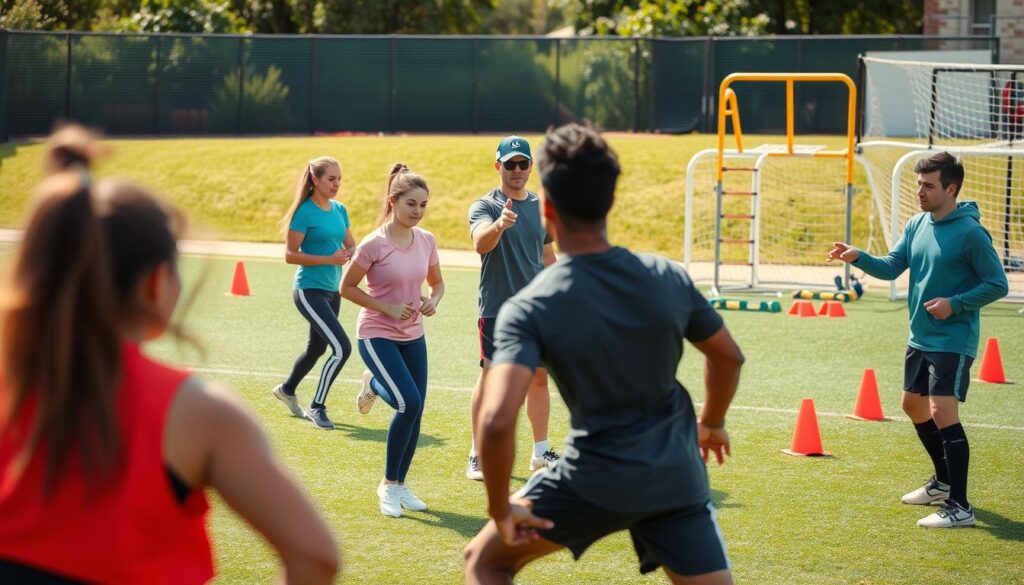
This information creates your Individual Development Plan (IDP). The IDP is a living plan. Custom drills are the team that brings it to life. They turn “needs work on left-hand finishing” into real exercises that improve your skills.
Creating these drills is about making the right fit for you. It’s not about starting from scratch. For more on this, check out why drills matter. The key is in the careful design, not just the movement.
The result? You can measure and improve your skills. You go from hoping for better to making it happen, one drill at a time. That’s the power of custom drills.
Success Stories
Forget the highlight reel. A real success story is about early morning tracking and adjusting drills after tough sessions. It’s a detailed look at a process that paid off.
The 1983 NC State “Cardiac Pack” is a great example. Their success wasn’t magic. It came from drills for intense moments and a daily focus on “Survive and advance.” This shows how player learning through practice leads to success. You can find more stories like this in resources on proven basketball development strategies.
True development sees failure as a chance to learn. Athletes who see a plateau as a signpost are on the right path. Studies show that techniques like breath control and visualization can increase success by 34%. This mindset shift is key, turning data into a roadmap.
The most inspiring stories are not accidents. They are the result of disciplined player learning, precise progress tracking, and tailored development plans. It’s the outcome of every smart decision made in a structured individual development plan. The final score is just the last chapter of a story you’ve been writing.