
The San Antonio Spurs did not lose Game 1 of the 2026 NBA Finals because the moment was too big for Victor Wembanyama. They lost because the New York Knicks made the final stretch of the game smaller, tougher, and more controlled.
New York’s 105-95 win on June 3 at Frost Bank Center gave the Knicks a 1-0 series lead and immediately shifted the pressure toward San Antonio before Game 2. Jalen Brunson finished with 30 points, the Knicks closed the game with better late-possession clarity, and Wembanyama’s 26 points, 12 rebounds, and three blocks were not enough to cover the Spurs’ offensive stagnation.
That is what makes this series so fascinating from a coaching perspective. The Spurs still have the most unique player on the floor. They still have size, home-court opportunity, and a roster capable of changing the geometry of a game. But after Game 1, the adjustment question is no longer theoretical. San Antonio must find cleaner ways to turn Wembanyama’s presence into repeatable offense and controlled defense when the Knicks tighten the game.
For a Texas basketball audience, this is more than an NBA Finals storyline. It is a live lesson in game management, matchup reading, and how a team responds when its first plan is good but not good enough.
Game 1 Was A Reminder That Talent Still Needs Structure
Wembanyama’s box score showed the full contradiction of his night. He produced like a franchise star, but his efficiency told the more important coaching story. Shooting 6-of-21 from the field in a Finals opener is not simply a cold night. It is a sign that New York succeeded in making some of his catches uncomfortable, some of his reads rushed, and some of his late-game decisions feel heavier than they needed to be.
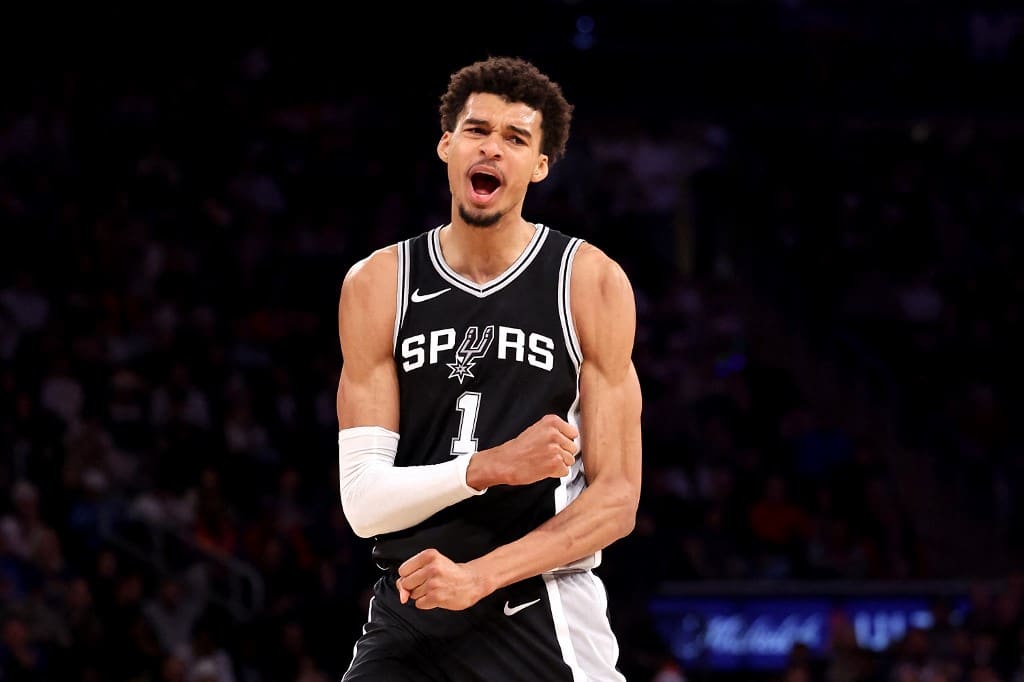
That does not mean the Spurs should pull the ball out of his hands. It means they need to help him receive it in better places.
The Knicks were comfortable when Wembanyama had to create from a standstill, especially when the floor was loaded toward him and the next pass was predictable. San Antonio’s first Game 2 adjustment should be about entry angle and timing. Wembanyama is too dangerous to be used only as a bailout option late in the clock. The Spurs need him touching the ball earlier, moving into catches, and forcing New York’s defense to react before it is fully set.
This is where youth coaches can learn from the Finals. A great player does not automatically create great offense. Coaches have to build the conditions around that player: spacing, timing, screening, weak-side movement, and role clarity.
The Spurs Need To Change Where Wembanyama Starts Possessions
The simplest adjustment is also the most important: San Antonio should vary Wembanyama’s starting points.
If he begins every important possession above the break or in static post position, the Knicks can load help, shade driving lanes, and turn him into a contested-shot creator. But if he starts possessions as a screener, cutter, trailer, or high-post passer, New York has more decisions to make.
Wembanyama is not a traditional big. He can punish switches, pass over pressure, attack closeouts, and protect the rim on the other end. That versatility only matters if the Spurs use it to create movement instead of isolation.
| Spurs Adjustment | Why It Matters Against New York |
|---|---|
| Use Wembanyama as an early-clock screener | Forces Brunson and Knicks guards into defensive decisions sooner |
| Flash him to the high post | Creates passing angles against loaded help defense |
| Run weak-side cuts behind Knicks pressure | Punishes overhelp and ball-watching |
| Let him attack from the slot instead of dead-center | Opens better kickout angles and driving lanes |
| Use him as a decoy on first action | Creates cleaner looks for De’Aaron Fox, Devin Vassell, and shooters |
This is the kind of adjustment that separates “give the star the ball” from real offensive design. The Spurs do not need to make Wembanyama less central. They need to make him central in more ways.
That same lesson shows up constantly in youth basketball game management, where coaches must learn when to run through their best player and when to use that player’s gravity to open the court for everyone else.
De’Aaron Fox Has To Become A Pressure Release Valve
The Spurs also need more from De’Aaron Fox, not just in scoring volume but in how he changes the rhythm of possessions. Game 1 exposed what happens when San Antonio becomes too dependent on Wembanyama to solve loaded defensive coverage.
Fox’s value in this matchup is speed, paint pressure, and pace disruption. The Knicks want a game that turns into half-court execution and late-clock shot-making. Fox gives the Spurs a way to escape that.
The adjustment is not simply “Fox has to score more.” It is that he has to make New York guard earlier in the possession. Quick drag screens, early rim attacks, and pitch-ahead offense can stop the Knicks from building a wall around Wembanyama.
San Antonio should also look for more Fox-Wembanyama two-man actions with different spacing behind them. If New York switches, Wembanyama can punish size mismatches. If the Knicks show help, Fox can turn the corner. If they bring a third defender, San Antonio’s shooters have to be ready with immediate decisions.
The Spurs cannot let New York’s defensive pressure turn every possession into a test of patience. They need more possessions where the Knicks are the team reacting.
The Fourth Quarter Has To Become More Organized
The most important Game 1 lesson was not from the first half. It was from the final minutes.
The Knicks looked more composed late. Brunson’s shot-making gave New York a clear offensive identity, while San Antonio drifted into tougher looks and less connected possessions. For a young Finals team, that is not unusual. But it must be corrected quickly.
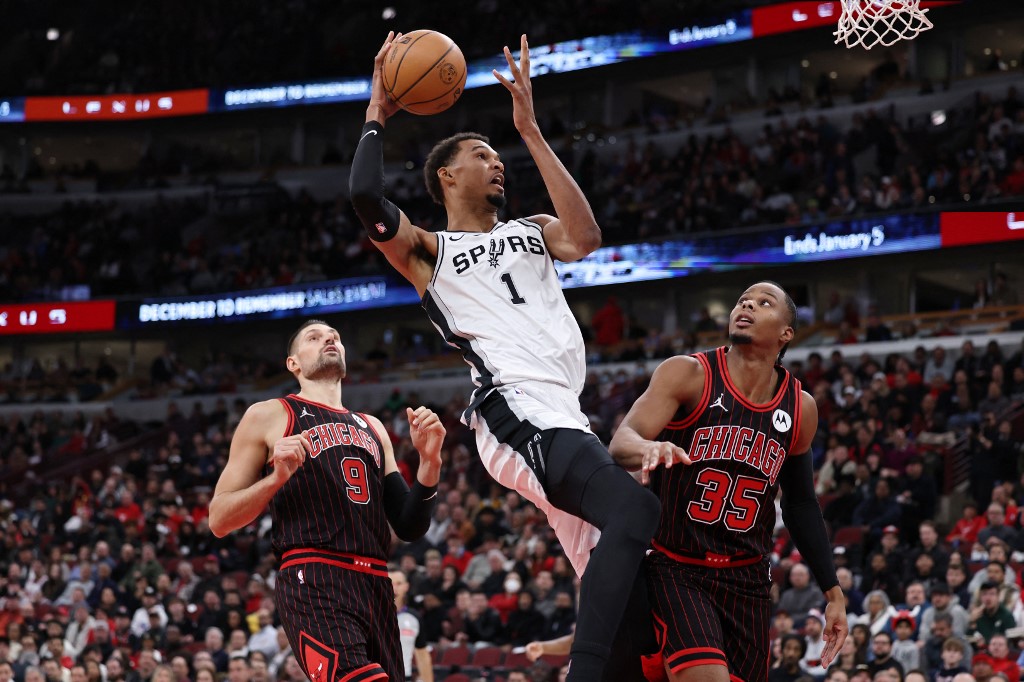
Late-game offense needs structure before emotion takes over. The Spurs should enter Game 2 with two or three preferred crunch-time packages already defined. One should involve Wembanyama as the primary option. One should use him as the screener. One should use him as a weak-side threat while Fox attacks downhill.
That matters because playoff pressure removes decision-making time. If players are unsure where the ball should go, spacing collapses. If spacing collapses, shot quality drops. If shot quality drops, transition defense becomes harder. The chain reaction is brutal.
The Knicks won Game 1 partly because they looked like a team that knew exactly what kind of shots it wanted late. The Spurs have to answer with the same level of clarity.
Wembanyama’s Defensive Role Needs More Protection From Spacing
Wembanyama is already one of basketball’s most intimidating defensive presences, but Game 1 showed how elite spacing can pull even a historic rim protector into uncomfortable choices.
Karl-Anthony Towns and the Knicks’ shooting structure helped create moments where Wembanyama had to decide between protecting the rim and respecting the perimeter. That is the math New York wants. If Wembanyama is lifted away from the basket, the Spurs lose some of their backline terror. If he stays home too long, the Knicks can create open rhythm looks.
San Antonio’s adjustment should not be to hide him. It should be to protect his defensive influence through better point-of-attack containment and sharper low-man rotations.
When Brunson gets downhill too easily, every Spurs defender is forced into a compromise. Wembanyama can erase mistakes, but he cannot erase every mistake without giving something else up. The guards must fight harder over screens, the wings must stunt with discipline, and the weak side has to rotate with urgency.
That is where championship defense becomes a five-player responsibility. A shot blocker may be the headline, but the system around him determines how often he can actually control the possession.
The Knicks Are Testing San Antonio’s Maturity As Much As Its Talent
This series is also a test of emotional response. San Antonio is not just trying to solve New York’s coverages. The Spurs are trying to prove they can absorb a Finals punch without overcorrecting.
That is why Game 2 matters so much. A young team can respond to a loss in two dangerous ways: panic or pride. Panic leads to unnecessary lineup changes and rushed offense. Pride leads to hero-ball and forced shots. The Spurs need the third option: disciplined adjustment.
Wembanyama does not need to abandon aggression. He needs more selective aggression. Fox does not need to dominate the ball. He needs to bend the defense earlier. The Spurs’ shooters do not need to hunt quick threes. They need to be ready when the Knicks’ help creates the right ones.
For coaches at every level, this is the heart of tournament basketball. The best teams do not treat a loss as proof that everything is broken. They treat it as information.
Why Game 2 Could Define The Series Tone
The NBA Finals can change quickly after one adjustment game. Game 1 gave the Knicks the first major statement, but it also gave the Spurs a clear map of what must improve: cleaner Wembanyama touches, better late-game organization, stronger guard pressure, and more disciplined defensive support behind the ball.
That is why broader conversations around NBA playoff value bets and series momentum often focus on whether one game reveals a true matchup edge or simply creates the next adjustment window. For San Antonio, Game 1 should be treated as the latter.
The Spurs still have the tools to turn the series. Wembanyama remains the matchup that New York has to solve every night. Fox still gives San Antonio a speed advantage when the offense flows through early action. The Spurs’ defense still has enough length to disrupt Brunson if the first layer of containment improves.
But talent will not be enough by itself. Game 2 demands a sharper version of San Antonio: more movement before Wembanyama catches, more confidence from secondary creators, more organized late-clock possessions, and more collective discipline when the Knicks try to spread the floor.
The lesson from Game 1 is not that the Spurs are overmatched. It is that the Knicks are too mature to be beaten by talent alone. If Wembanyama and San Antonio adjust with patience, structure, and urgency, the Finals can still become the kind of long tactical fight that rewards the team willing to learn fastest.