
Changing your team’s shape during a game is called an in-game formation adjustment. It’s a planned move made while the game is on.
Switching from a 4-3-3 to a 3-5-2 aims to gain an advantage. It might be to control the midfield or strengthen your defense. The goal is to do this smoothly, without losing your team’s structure.
This change is not random. It’s a well-practiced move that keeps your team’s defense strong and attack potent. Learning this is key to successfully changing tactics in the game.
A key idea for smooth changes is “rest defense.” This is your team’s setup when you have the ball. A solid rest defense makes quick, secure on-the-fly changes easier.
Knowing when to make this change is critical. It often comes from spotting the opponent’s weak spots, a key in offensive strategy. When done right, this move can give your team a big advantage.
When a Shape Change Pays Off
Not every game situation needs a formation change. But, switching from a 4-3-3 to a 3-5-2 can be a smart move. It’s not about panicking. It’s a strategic choice for specific challenges.
Make a quick switch in these situations:
- When facing a tight, defensive team.
- To hold onto a narrow lead late in the game.
- In response to a big opponent substitution or tactical change.
If you’re down a goal and the other team is playing defensively, a 4-3-3 might not be enough. Switching to a 3-5-2 adds more players in midfield and attack. This gives you a second striker and a wing-back for wide attacks. It can open up a defense that was previously solid.
When you’re leading by one goal, safety is key. A 3-5-2 setup provides a strong defensive line. Your wide defenders can become wing-backs, sitting deeper to form a solid back five. This makes it harder for the other team to break through.
This change is also good for countering. If the other team brings on a skilled winger or uses two strikers, your 4-3-3 might struggle. Switching to a 3-5-2 gives you an extra defender to handle the strikers and wing-backs to deal with wide threats.
The beauty of this switch is in the asymmetry. Your 3-5-2 doesn’t need to be perfectly balanced. You can create an uneven shape to target a specific weakness.
For instance, you might tell your left wing-back to stay high and wide, pinning the opponent’s fullback. On the right, the wing-back moves inside, creating a numerical advantage in the center. This asymmetry focuses on the opponent’s weak side or helps a fullback who likes to attack. It turns the shape change into a precise tactic.
This strategy is more than just adjusting. It’s a deliberate plan to control the game. The key is to make the asymmetry a thoughtful choice, not a mistake. Your players need to know their roles in the new, uneven shape for it to succeed.
Roles Board: Who Moves Where
Changing the game’s shape depends on a clear plan for all ten outfield players. It’s not about players doing their own thing. It’s a strict plan where everyone knows their next move. The goal is to keep your team’s rest defense strong during the change.
Let’s look at the movement from the back. In a 4-3-3, you have two center-backs and two fullbacks. When switching to a 3-5-2, one fullback moves inside to become a third center-back, known as the stopper. The choice of which fullback moves is based on strategy. Usually, it’s the fullback on the side away from the ball, securing the far post.
The other fullback has a different role. They might stay wide for a bit before moving into the wing-back space. This prevents a gap on the flank. The back three now includes the two original center-backs and the converted fullback.
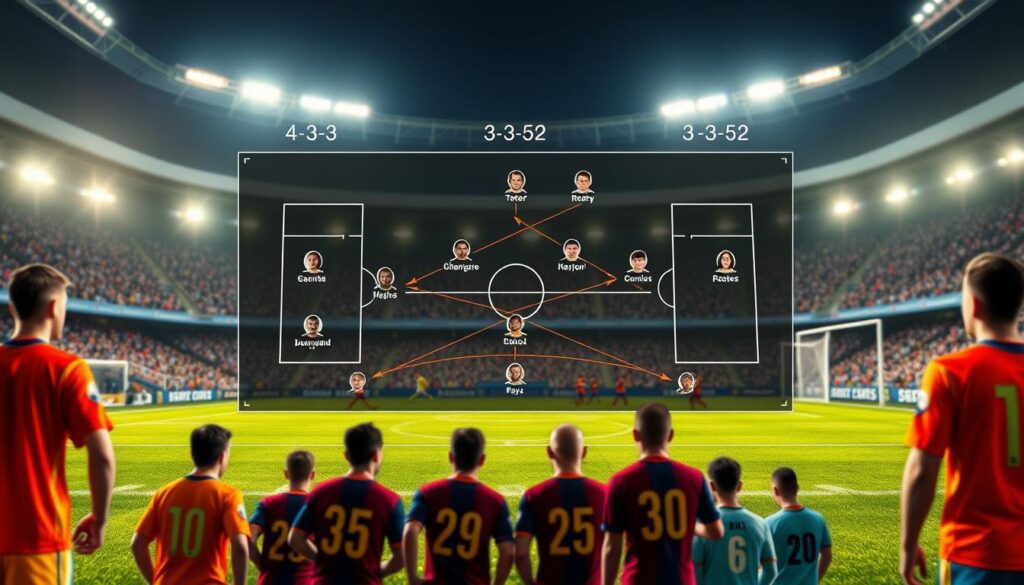
The midfield trio also changes. One midfielder, often the most defensive, drops back to join the holding midfielder. This creates a strong double pivot in front of the new back three. The other two midfielders move forward. They play in the half-spaces, linking defense to attack and supporting the strikers.
The wingers see the biggest change. They’re no longer just wide forwards. They become true wing-backs, needing great stamina. Their job is to add width in attack and defend quickly. They’re the heart of the new shape.
Here’s a quick summary of the main role changes:
- Fullback (One side): Tucks inside → becomes a third center-back (Stopper).
- Fullback (Other side): Holds width → pushes into Wing-Back channel.
- Central Midfielder (One): Drops deep → forms Double Pivot.
- Wingers (Both): Drop deeper → assume Wing-Back duties (Attack & Defend).
Every move is made to avoid gaps. The dropping midfielder covers the space left by the advancing fullback. The wing-backs add width, covering for the tucked-in fullback. This ensures no gaps for opponents to exploit. The whole team works together to keep a strong rest defense.
Without a clear plan, the change fails. Players get lost, leaving gaps. Coordination is key. When done right, the team smoothly changes to a solid 3-5-2 without defensive worries. This keeps your rest defense strong and turns a tactical change into a strategic win.
Fullback-to-Stopper and Winger-to-WB Conversions
The heart of a successful in-game formation change lies in the players’ ability to switch roles under pressure. The fullback becoming a stopper and the winger turning into a wing-back are two of the toughest changes. These individual shifts are key to a team’s overall shape and security.
When a fullback moves to a stopper role, their game changes dramatically. They stop chasing wingers and start focusing on defending. They now need to win aerial battles and hold a defensive line.
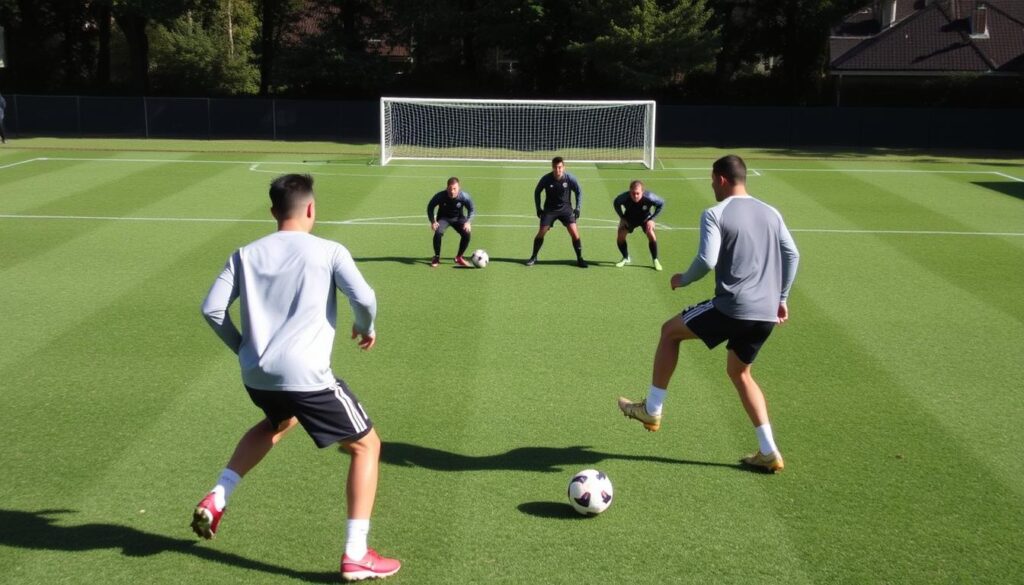
On the other hand, a winger’s role expands when they become a wing-back. They must balance attacking and defensive duties. This role change requires a big mindset shift from attacking to defending.
The fullback and winger’s roles are closely linked. The fullback’s move to a stopper role creates space for the winger to attack. If either player struggles, the team’s defense or attack can falter.
Training is key to making these changes smooth. Drills focus on specific skills each player needs. For fullbacks, it’s about defensive headers and intercepting passes. Wingers need to practice recovery runs and timing their overlaps.
Perfecting these role changes is essential for a team’s success. When done well, these shifts can turn a tactical advantage into a winning strategy.
Asymmetry to Protect Transitions
The most secure 3-5-2 formation often looks different on the field. It uses one wing-back as a defensive anchor. This asymmetry helps the team survive when they lose the ball.
When the team loses the ball, a symmetrical shape can leave them open. Both sides might be vulnerable to counter-attacks. But, an asymmetric setup helps by defining roles for each side.
One wing-back stays close to the back three, creating a solid defensive block. This setup gives the team a strong base to defend against quick breaks.
The other wing-back pushes high, supported by a central midfielder. Together, they create an attacking overload. This setup lets the team attack without exposing both flanks.
The table below shows the main roles on each side of this system:
| Tactical Zone | Primary Role | Key Player Actions | Transition Focus |
|---|---|---|---|
| Conservative Side | Defensive Stability | Wing-back stays deep; forms back-four; covers central spaces. | Immediate defensive shape; stops counters on strong side. |
| Attacking Side | Creative Overload | Wing-back provides width; midfielder joins for 2v1 situations. | Quick forward passing; exploits space after regaining ball. |
| Central Core | Balance & Switch | Remaining midfielders and strikers adjust to support both zones. | Redirects play to the less-pressured side of the field. |
This setup isn’t fixed. It changes based on the game’s flow and the opponent’s pressure. Coaches decide which side is defensive based on the score and the opponent’s tactics.
When protecting a lead, the team might focus more on defense. When chasing a game, they might attack more. This flexibility is like how systems adapt in studies on dynamic systems.
Understanding this deliberate imbalance can turn a weakness into a strength. It gives the team a clear plan for the most intense moments of the game.
Post-Match Review Template
After testing a new formation, a detailed review is key. This template helps turn game notes into actionable data for your next training.
Keep track of important game stats. Note how many times the team successfully transitioned without giving up a goal. Also, record the pass completion rate after switching to the 3-5-2 formation. Look at defensive plays like interceptions and tackles from players in new roles, like the fullback.
Video analysis is a must. Save clips from the ten minutes right after the formation change. Watch these closely, focusing on your team’s defense. Check how players position themselves behind the ball. A strong defense stops counter-attacks when the opponent first gets the ball back.
Ask yourself these questions during the review. Did the new formation give us the numerical edge we wanted? Were the players in their new roles comfortable? Which moments showed a weakness in our defense? The answers will guide your training plans for the next week.