
Walking into a youth tournament without knowing your opponent is like going to a fight with a spoon. Charming, but ultimately messy. I learned that being prepared is key. From studying Big Ten hitters to understanding high school offenses, I found that victory goes to those who are ready.
This isn’t about being paranoid; it’s about recognizing patterns. Before we dive into the game, we must gather intelligence. It’s like the pre-game prep, where the real battle is in the data.
Whether you have a team analyzing Synergy data or you’re a coach with a smartphone, the approach is the same. We’re moving away from relying on instincts. Our aim is to turn raw data and stats into a clear story of our opponent’s strengths and weaknesses.
From baseball’s defensive shifts to football’s deep analysis, the focus is on detailed work. It’s about building a detailed profile of your competition. Or, at least, understanding if their players crack under pressure.
This is the core of smart opponent research. It’s how we turn confusion into a winning strategy.
Identifying Key Players
Scouting isn’t just about counting stars. It’s about finding the ones that create black holes in the opponent’s strategy. Every team has talent, but only a few players really control the game. Your job is to find them.
This isn’t just about stats. Points and rebounds are important, but the real story is in the details. You need to know why a player is good and when they might struggle.

In baseball, scouting reports are like tragicomic poems. A hitter’s OPS split tells one story, but their chase rate with runners in scoring position tells another. You’re looking for the hitter who excels against fastballs but struggles with sliders.
Pitchers are a puzzle too. Their heat-maps show their psychological tactics. Is that ace hiding a weak changeup? Does he avoid using his curveball in tough situations?
Basketball scouting is like studying characters. You need to find the player who will make the big play before it happens. Is the shooter who always takes the last shot actually avoiding contact?
Watch the point guard’s hips. A small change in their stance can reveal a lot. That “clutch” shooter might just be avoiding contact.
Football scouting is like forensic analysis. A defensive end’s stance can tell you a lot. Is he a “speed rusher” who always attacks the gap? What happens when you take away his best move?
The table below breaks down the scouting lens for each sport. It’s your cheat sheet for spotting the real talent.
| Sport | Primary Scouting Focus | Key Metrics & Tells | Common Weakness to Target |
|---|---|---|---|
| Baseball | Hitter/Pitcher Tendencies | Spray charts, pitch chase rates, home-to-first time, pitch usage splits | Hitter’s hole in the swing; pitcher’s least-thrown pitch in high leverage |
| Basketball | On-Ball Decision Making | Drive direction tells, shot selection under pressure, free-throw percentage | Player who avoids weak hand; poor shooter forced to create |
| Football | Pre-Snap Alignment & Technique | Lineman’s stance width, first-step direction, favored pass-rush move | Aggressive rusher susceptible to counters; coverage player who eyes the backfield |
This process creates two important documents: the individual dossier and the team summary. The dossier dives deep into a player’s strengths and weaknesses. It answers: What makes them tick? What makes them crack?
The team summary is like a map of the stars. It shows how players work together. Does their offense rely on one player, or is it a team effort? Is their defense strong because of one player, or is it a team effort?
At Iowa, I learned that data reveals patterns. At Penn State, I learned that pressure exposes character. The best scouting combines both. It finds the hidden patterns in the game.
You’re not just listing names. You’re profiling for athletic dominance. You’re finding the players who can make a difference. When you know who to push and who to pull, the game unfolds like a script you’ve already read.
Adjusting Tactics
Having a dossier on your opponent is one thing; knowing what to do with it is where championships are won. This is the moment your intelligence operation pays dividends. You move from the war room to the battlefield.
Intel without application is just expensive trivia. The trick lies in synthesis. You must turn pages of data into digestible, actionable commands.
First, a word of caution from the Wizard of Westwood. The legendary John Wooden warned against over-adjusting your own game plan for a single opponent. Completely reinventing your defense to stop one superstar? That’s often a fool’s errand. It disrupts your team’s rhythm and identity.
Instead, think surgical strikes. Be precise, not panicked. Maybe you tweak your pitching rotation. Your best breaking-ball pitcher faces their chase-happy cleanup hitter with runners in scoring position. In basketball, you install a simple “ice” call for when their point guard drives left.
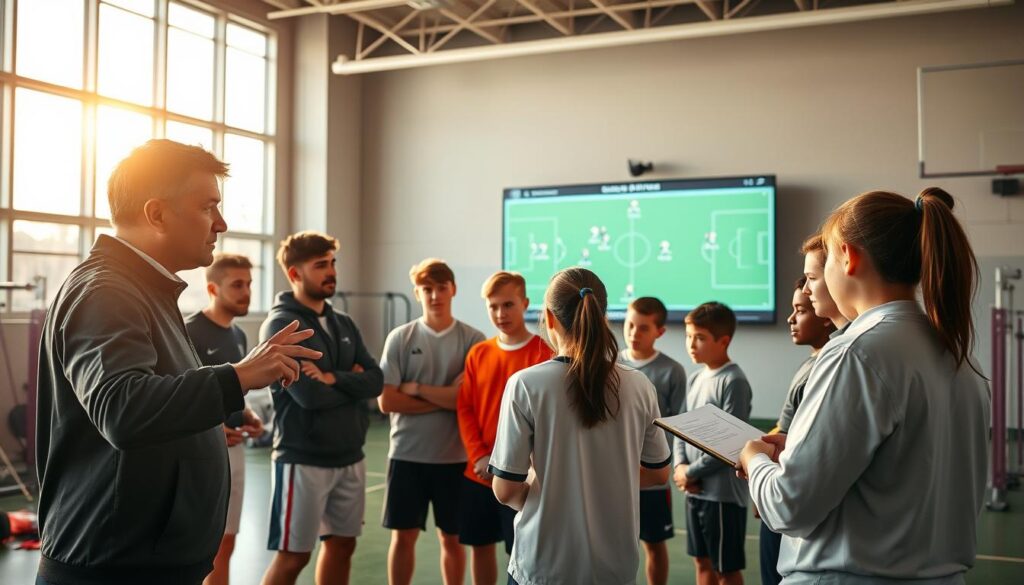
The data from your reports—the heat maps and spray charts—become the script for your week of practice. This is where effective game tactics are born. The process starts with your coaching staff.
Discuss the report with your assistants. Highlight the three or four most pertinent tendencies. Then, keep it simple for the players. Complexity breeds confusion. Confidence comes from clarity.
Take those specific adjustments directly to the practice floor or field. If you’re preparing for a dominant post player, run defensive drills focused on fronting and weak-side help. To counter a full-court press, dedicate time to practicing press offense against a scout team that mimics the opponent’s exact traps.
Your scout team’s job transforms. They’re not just running plays. They’re embodying tendencies. They execute the opponent’s favorite out-of-bounds set. They replicate the defensive end’s signature club-rip pass rush move. They give your starters a realistic look.
The goal is repetition. Make the unfamiliar familiar. When game day arrives, your players shouldn’t be surprised. They should feel a sense of déjà vu. “We’ve seen this before. We know what’s coming.”
This methodical approach to preparation is what separates good teams from great ones. It’s akin to the deep strategic thinking required in developing insight in competitive play. You’re not just reacting. You’re anticipating.
Below is a framework for translating scouting data into practice. It shows how different sports approach the same core challenge.
| Sport | Scouting Data Input | Tactical Adjustment | Practice Implementation |
|---|---|---|---|
| Baseball | Hitter spray charts & swing tendencies | Defensive shift alignment | Live batting practice against pitcher throwing to spots |
| Basketball | Play frequency & star player iso tendencies | Help-side defense rules & “blitz” calls | 5-on-5 scrimmage with scout team running opponent sets |
| Football | Opponent formation tendencies on 3rd down | Sub-package personnel & coverage checks | Scripted period where scout O runs high-frequency plays |
| General Mindset | Opponent’s comfort zone | Disrupt rhythm without self-sabotage | Drill specific responses until they become automatic |
The confidence this builds is tangible. A player who has practiced against a specific move fifty times walks onto the field with a plan. Knowledge dispels anxiety. This is the ultimate goal of your adjustment phase.
You transform raw data into muscle memory. You turn apprehension into assurance. The opponent’s best weapon becomes a known quantity, not a terrifying mystery.
So review your reports. Identify the leverage points. Then craft the minimal, most effective changes to refine your game tactics. Practice them with purpose. The victory isn’t just won on game day. It’s earned in the meticulous preparation of the week before.
Tournament Examples
Think of a weekend tournament as a live-action puzzle. The pieces move between rounds. You win your opener, and your next opponent is a mystery. The clock is ticking.
This is where tournament preparation really matters. You start assessing quickly. Maybe you film their morning game. A parent-volunteer texts you notes.
You’re not starting from scratch. You’re looking for patterns like a detective. Who took the clutch shot? Which pitcher is tiring? This immediate intel gathering is key.
Then, you make quick tactical changes. A halftime decision to hedge harder on screens. A plan to attack a pitcher early in the count. It’s a high-stakes, real-time mix of observation and action.
I’ve seen teams with less talent advance deep because they mastered this cycle. They turned fragmented data into a coherent plan between games.
Understanding an opponent’s past performance is like deciphering a chess tournament crosstable. It shows who they rely on and when they crack under pressure. This knowledge fuels confident, adaptive tournament preparation.
The trophy isn’t always lifted by the most athletic team. It’s often hoisted by the most observant, intellectually prepared squad. The next time you’re scribbling notes on a napkin between games, remember: you’re not just killing time. You’re engineering an advantage.